PART 5 - Requirements for a class UK4 Unmanned aircraft system
SI 2025 No. 1106
Text in magenta in force from 1 January 2028
A class UK4 UAS bears the following label on the UA in a visible manner
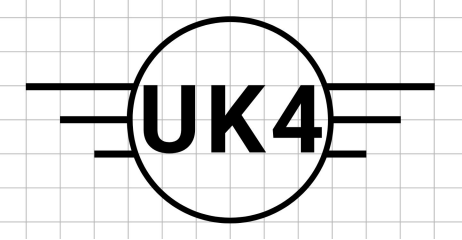
A class UK4 UAS shall comply with the following:
(1) have an MTOM of less than 25 kg, including payload;
(2) be safely controllable and manoeuvrable by a remote pilot following the manufacturer’s instructions, as necessary under all anticipated operating conditions including following the failure of one or, if appropriate, more systems;
(3) not be capable of automatic control modes except for flight stabilisation assistance with no direct effect on the trajectory and lost link assistance provided that a pre-determined fixed position of the flight controls in case of lost link is available;
[Editorial note: New paragraphs 3(A) and (B) are inserted on 1 January 2028:
(3A) have a unique serial number compliant with standard ANSI/CTA-2063-A-2019, Small Unmanned Aerial Systems Serial Numbers, 2019;
(3B) have a direct remote identification that:
-
allows the upload of the UAS operator registration number required in accordance with Article 14 of Implementing Regulation (EU) 2019/947 and any additional number provided by the registration system; the system shall perform a consistency check verifying the integrity of the full string provided to the UAS operator at the time of registration; in case of inconsistency, the UAS shall emit an error message to the UAS operator;
-
ensures, in real time during the whole duration of the flight, the direct periodic broadcast from the UA using an open and documented transmission protocol, in a way that it can be received directly by existing mobile devices within the broadcasting range, of at least the following data:
(i) the UAS operator registration number and the verification code provided by the CAA during the registration process unless the consistency check defined in point (a) is not passed;
(ii) the unique physical serial number of the UA compliant with point (3A);
(iii) the time-stamp, the geographical position of the UA and its height above the surface or take-off point;
(iv) the route course measured clockwise from true north and ground speed of the UA;
(v) the geographical position of the remote pilot or, if not available, the take-off point; and
(vi) an indication of the emergency status of the UAS;
-
reduces the ability of tampering the functionality of the direct remote identification system;
(4) be placed on the market with manufacturer’s instructions providing:
(a) the characteristics of the UA including but not limited to the:
— class of the UA
— UA mass (with a description of the reference configuration) and the maximum take-off mass (MTOM);
— general characteristics of allowed payloads in terms of mass, dimensions, interfaces with the UA and other possible restrictions;
— equipment and software to control the UA remotely; and
[Editorial note: The 'and' above is deleted and new entries below are inserted on 1 January 2028:
— the procedures to upload the UAS operator registration number into the direct remote identification system;
— reference of the transmission protocol used for the direct remote identification system emission; and]
— and a description of the behaviour of the UA in case of a loss of the command and control link;
(b) clear operational instructions;
(c) maintenance instructions;
(d) troubleshooting procedures;
(e) operational limitations (including but not limited to meteorological conditions and day/night operations); and
(f) appropriate description of all the risks related to UAS operations;
(5) include an information notice published by the CAA providing the applicable limitations and obligations, in accordance with Implementing Regulation (EU) 2019/947.